Choral Day
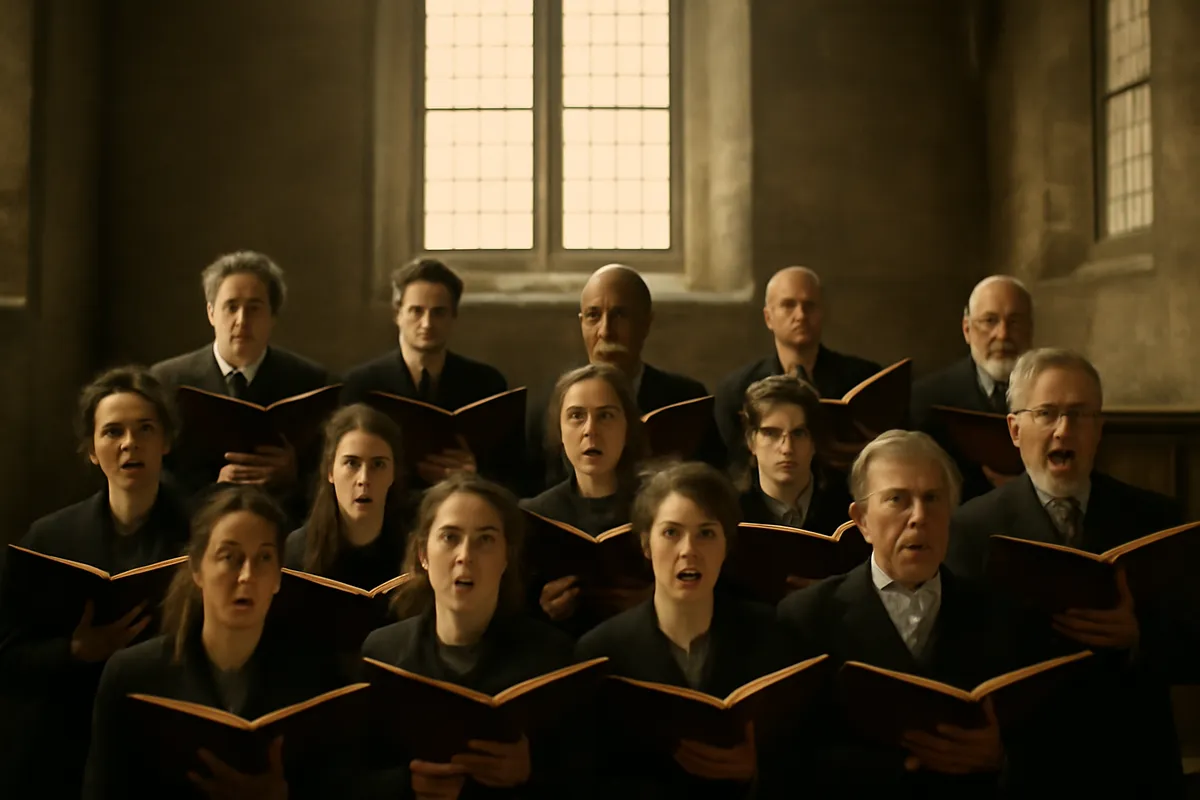
What the day is
Choral Day is observed on December 11, though the international observance it derives from falls on the second Sunday of December and therefore moves each year. It marks group singing, which remains one of the largest participatory art forms anywhere.
Origin and background
World Choral Day was initiated in 1990 by the International Federation for Choral Music, with the aim of having choirs everywhere sing on the same day in loose coordination.
What research has found since is more interesting than the observance itself. Singing requires controlled, extended exhalation, and when a group sings the same phrases their breathing aligns. Measurements taken from choirs have shown heart rate variability synchronizing across singers as a result, with the effect strongest in slow unison singing. The bodies of people singing together move into a shared rhythm, and that is a finding rather than a metaphor.
Group singing also bonds people unusually fast. Comparisons of singing classes against other group activities found that singers felt close to the rest of the group considerably sooner, an effect strong enough that researchers described singing as an icebreaker. The likely reason is that singing scales in a way conversation does not: a hundred people can sing together, while talking stops working past a handful.
The form has a long institutional history behind it, running from plainchant through the development of polyphony to the four-part arrangement most choirs still use. Community and amateur choirs are where the great bulk of it actually happens.
One practical point deserves stating plainly, because it stops people joining. The proportion of people genuinely unable to match pitch is very small. Most who believe they cannot sing are untrained rather than incapable, and a choir is where that gets fixed.
How to take part
- Join a community choir. Most take beginners and hold no audition at all.
- Sing with other people in any form, including badly and in a car.
- Go and hear a live choir, which sounds substantially different in a room than through speakers.
- If you were told as a child that you could not sing, treat that as untested rather than settled.
- Try slow unison singing, which is where the physiological effects show up most strongly.
Celebrate Choral Day
As an Amazon Associate and an eBay Partner Network affiliate we earn from qualifying purchases. These links open Amazon and eBay search results.