Pi Approximation Day
Celebrating Mathematics and Approximations
Introduction
Pi Approximation Day, observed on July 22nd, is a quirky celebration that pays homage to the mathematical constant pi (π) and its approximations. While Pi Day on March 14th celebrates π itself, Pi Approximation Day focuses on the creativity and ingenuity of mathematicians and enthusiasts who find clever ways to approximate this irrational number. In this blog post, we will explore the origins of Pi Approximation Day, delve into the history of pi and its significance, and share interesting facts and celebrations associated with this unique holiday.
The Origins of Pi Approximation Day
Embracing Approximations
Pi Approximation Day emerged as a playful and educational observance to highlight the versatility and practical applications of approximations in mathematics. It encourages enthusiasts to explore creative methods to calculate or express the value of pi in different contexts.
Cultural and Mathematical Celebration
The choice of July 22nd for Pi Approximation Day is a nod to the fraction 22/7, which is a common approximation for pi. In the day-month format (22/7), it closely resembles the decimal approximation of pi (3.14), adding a whimsical touch to the celebration.
The History of Pi and Its Significance
Ancient Origins
The mathematical constant pi (π) represents the ratio of a circle’s circumference to its diameter. It has fascinated mathematicians, scientists, and scholars since ancient times, with early approximations found in ancient Egyptian, Babylonian, and Greek civilizations.
Archimedes’ Contributions
Archimedes of Syracuse (c. 287–212 BC) was among the first mathematicians to rigorously approximate the value of pi. Using geometric methods and inscribed polygons, Archimedes calculated pi with remarkable accuracy, laying the foundation for future developments in mathematical approximation techniques.
Modern Calculations and Discoveries
In modern mathematics, pi continues to be a subject of study and fascination. Mathematicians have devised various algorithms, formulas, and computational techniques to calculate pi to millions, billions, and even trillions of decimal places, pushing the boundaries of mathematical precision and computation.
Fascinating Facts About Pi
Decimal Representation
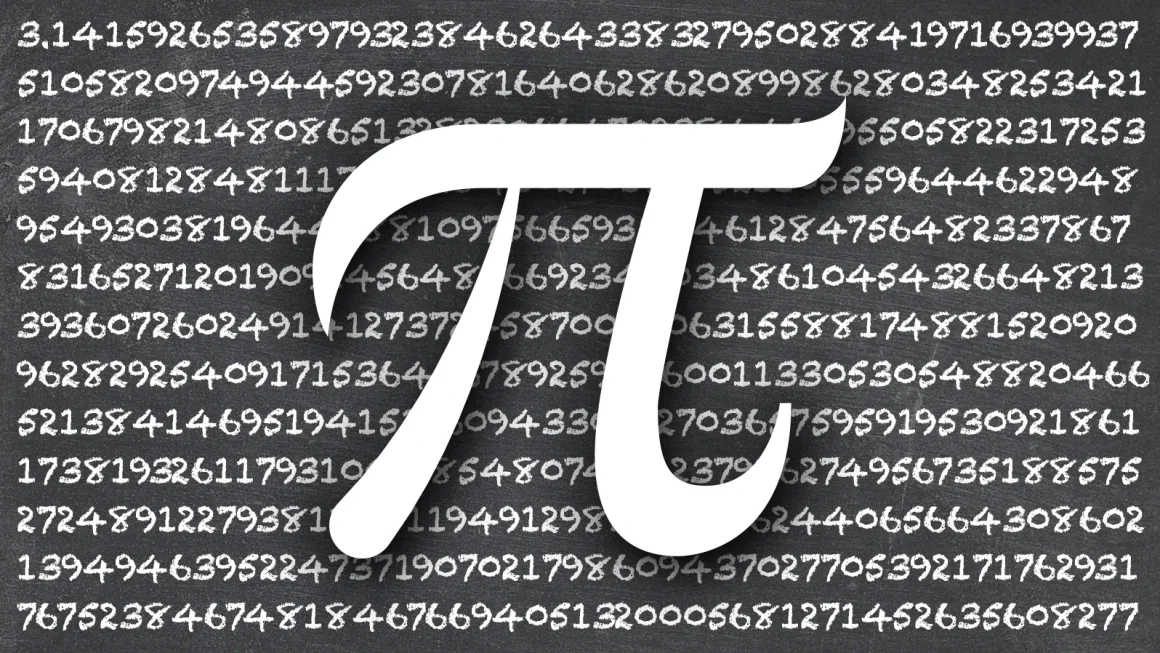
Pi is an irrational number, meaning it cannot be expressed as a finite decimal or fraction. Its decimal representation is infinite and non-repeating (3.14159265358979323846…), making it a subject of fascination and challenge for mathematicians and enthusiasts.
Pi in Nature and Science
Pi appears in diverse scientific and natural phenomena, from the orbits of planets to the shapes of galaxies and the spiral patterns of shells and hurricanes. Its ubiquity underscores its fundamental role in understanding the geometry and dynamics of the universe.
Cultural and Popularity
Pi has permeated popular culture, inspiring books, films, music compositions, and even culinary creations (such as pi-themed pies). Pi Day (March 14th) is celebrated worldwide with activities, contests, and events that promote mathematical education and appreciation.
Celebrating Pi Approximation Day
Educational Activities
Engage in educational activities that explore the concept of pi and its approximations. Conduct experiments, solve puzzles, or participate in mathematical challenges that encourage creative thinking and problem-solving skills.
Pi Approximation Contests
Organize or participate in pi approximation contests where participants compete to find creative and accurate ways to approximate pi. These contests foster a spirit of friendly competition and highlight the diversity of approaches to mathematical approximation.
Pi-themed Treats
Celebrate Pi Approximation Day with pi-themed treats such as pies, cookies, or cakes. Host a pi baking contest or share pi-themed recipes with friends, family, or colleagues to enjoy delicious creations while honoring mathematical creativity.
Conclusion
Pi Approximation Day on July 22nd celebrates the creativity, curiosity, and ingenuity of mathematicians and enthusiasts who explore the fascinating world of pi and its approximations. From ancient civilizations to modern computational methods, pi continues to inspire awe and discovery in the realm of mathematics and beyond. So, on Pi Approximation Day, join in celebrating the joy of mathematical approximation, embrace the spirit of exploration, and appreciate the beauty of pi in all its infinite and approximate forms.
Celebrate Pi Approximation Day
As an Amazon Associate we earn from qualifying purchases. These links open Amazon search results.