Old Rock Day
What the day is
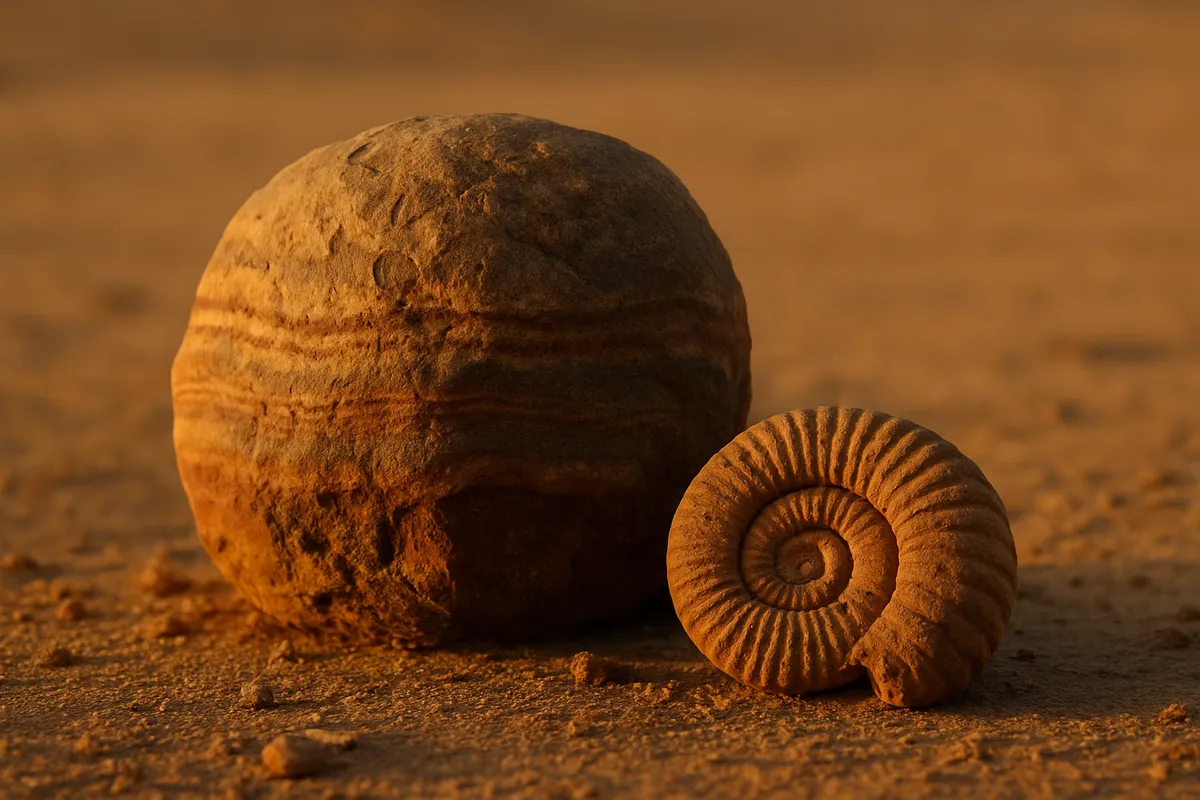
Old Rock Day is observed on January 7. It is an informal day with no documented founder, and it is a chance to appreciate rocks and fossils and the age they carry. There is no required activity, which leaves a lot of room for people to enjoy it in their own way.
Rocks are easy to overlook, yet each one records a stretch of the Earth's history. A cobble in a stream or a stone in a garden wall may have formed millions of years ago, long before there were people to pick it up.
Origin and background
The Earth is about 4.5 billion years old, and the oldest rocks are still around. The Acasta Gneiss in Canada's Northwest Territories is about four billion years old, among the oldest known rock formations on the planet. Even older are tiny crystals of zircon from Western Australia, which have been dated to around 4.4 billion years, and which are the oldest known fragments of the Earth's crust.
Fossils are the other half of the story. They are the preserved remains or traces of ancient life, and in rocks formed from sediment they let scientists reconstruct which plants and animals lived when. Layered stone from places such as the Grand Canyon displays hundreds of millions of years of history in stacked bands, which is why geologists treat roadcuts and cliffs as books.
Collecting rocks is a time-honored hobby, called rockhounding, though there are rules. Collecting is banned in national parks and many protected areas, and permission is needed on private land. Small amounts of common stones can usually be gathered from public lands, but check local regulations first.
How to take part
- Take a walk along a creek bed or beach and pick up a stone that catches your eye.
- Visit a natural history museum to see fossils and mineral specimens up close.
- Learn the three main kinds of rock: igneous, sedimentary and metamorphic, and try to identify one of each.
- Look at a roadcut or cliff face and notice its layers and colors.
- Start a small collection, labeling where and when each rock was found.
Celebrate Old Rock Day
As an Amazon Associate and an eBay Partner Network affiliate we earn from qualifying purchases. These links open Amazon and eBay search results.